
Gibraltar is not in the EU. It left alongside the United Kingdom on 31 January 2020, and the transition period ended on 31 December 2020. But that's only half the story. A landmark UK-EU treaty published on 26 February 2026 is about to transform Gibraltar's relationship with Europe - bringing Schengen-style free movement, dismantling the border fence, and creating a customs union with the bloc. Provisional application is set for 15 July 2026.
Here's exactly what's changing, what stays the same, and what it means if you're visiting, working, or living on the Rock.
Did Gibraltar Leave the EU?
Yes. Gibraltar left the European Union on 31 January 2020 when the UK formally withdrew under the Brexit process. EU law stopped applying to Gibraltar on 31 December 2020, when the transition period ended.
This was despite overwhelming opposition from Gibraltarians themselves - 96% voted Remain in the 2016 referendum, on an 84% turnout. No region in the UK or its territories had a stronger Remain vote.
Before Brexit, Gibraltar had been part of the EU (and previously the EEC) since 1973 through the UK's membership. However, it was always in a unique position - outside the EU Customs Union, the Common Agricultural Policy, and the EU VAT area.
The immediate impact of leaving was felt hardest at the border. Cross-border workers, tourists, and residents faced the prospect of longer queues, passport checks, and the looming EU Entry/Exit System (EES) - a biometric scanning programme that would add fingerprint and facial-image checks for every non-EU national crossing an external Schengen border.
The 2026 Gibraltar Treaty Explained
After more than five years of negotiations, the UK and EU published the full text of the Agreement in respect of Gibraltar on 26 February 2026. It runs to over 1,000 pages with 336 articles and 46 annexes.
The treaty covers three main areas:
- Free movement of persons - removing routine immigration checks at the land border with Spain
- Customs union - a customs union between Gibraltar and the EU for goods (not the same as Gibraltar joining the EU's own customs union)
- A new tax framework - introducing a Transaction Tax on goods imported or manufactured for sale, replacing Gibraltar's old import duty regime
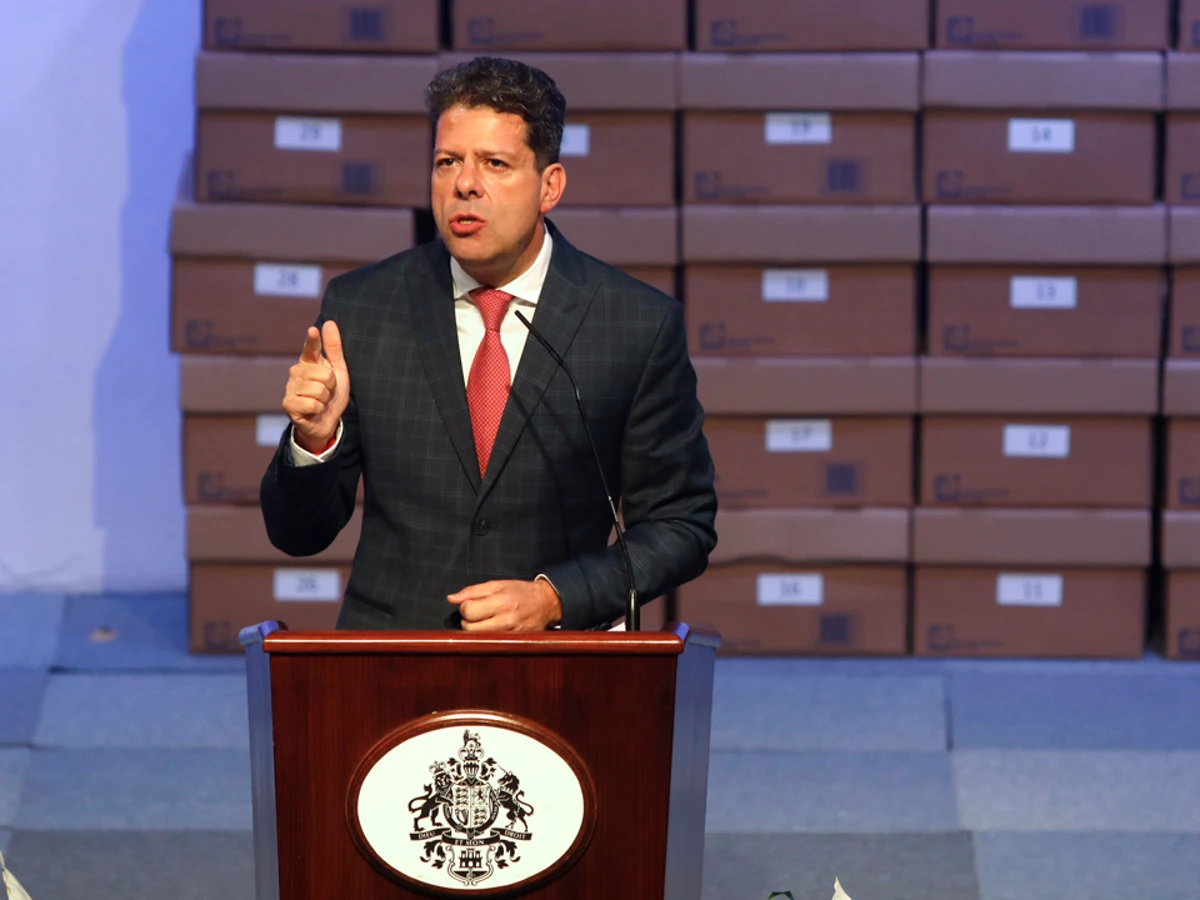
The deal was reached in principle in June 2025 after years of difficult negotiations between London, Madrid, Brussels, and Gibraltar. Chief Minister Fabian Picardo described it as the most significant agreement for Gibraltar since the Treaty of Utrecht in 1713.
Provisional application is targeted for 15 July 2026.
What Happens to the Border?
The border fence - known locally as "la Verja" - will be dismantled.
Spanish Foreign Minister José Manuel Albares described the move as "eliminating the last wall on the European continent." The barbed-wire fence has separated Gibraltar from La Línea de la Concepción for over a century, and its removal is one of the most symbolic elements of the treaty.
Under the new arrangement:
- No routine passport checks at the land border crossing
- The land frontier becomes an internal Schengen-style passage - similar to crossing between France and Spain
- Schengen entry checks move to Gibraltar's airport and port, carried out by Spanish Policía Nacional officers alongside Gibraltar authorities
- Over time, the bottleneck road designs at the current crossing point will be redesigned
This is transformational for the approximately 15,000 people who cross the Gibraltar-Spain border every day - commuters, shoppers, tourists, and residents.
Is Gibraltar Joining Schengen?
No - but it will follow Schengen-style rules.
This is one of the most misunderstood aspects of the treaty. Gibraltar is not formally joining the Schengen Area. It remains a British Overseas Territory outside both the EU and Schengen. However, the treaty creates a bespoke arrangement that mirrors Schengen principles for the movement of persons.
| What happens | What doesn't happen |
|---|---|
| Land border controls removed | Gibraltar doesn't join the EU |
| Schengen checks at airport and port | Gibraltar doesn't become part of Schengen |
| Free movement across the land frontier | UK sovereignty is not affected |
| EU border agency Frontex involved | Gibraltar doesn't adopt EU law broadly |
The treaty text itself states: "No provision of the Agreement shall affect sovereignty."
The New Customs Union & Transaction Tax
Beyond free movement, the treaty establishes a customs union between Gibraltar and the EU. This means:
- No customs checks on goods crossing the land border
- Gibraltar aligns with EU customs rules for imports and exports
- A single labour market is created for cross-border workers
Alongside the customs union, Gibraltar's old import duty regime is replaced by a new Transaction Tax on goods imported or manufactured for sale in the Gibraltar market (Government of Gibraltar Technical Notice 72/2026):
- Standard rate 15% from 15 July 2026, rising annually to reach 17% by the third year
- Food, water, medicines and books are taxed at 0%, with a further defined list at a reduced 5% (categories under Annex III of the EU VAT Directive)
- Excise duty continues separately on tobacco, fuel and alcohol (fuel excise is waived for the first three years)
- It is not VAT, Gibraltar continues to have no VAT
Gibraltar will also retain its own tax system - including its attractive corporate tax rate of 15%, no capital gains tax, no inheritance tax, and no council tax.

What Changes for Tourists
If you're planning to visit Gibraltar in 2026, here's what the treaty means for you:
Arriving by land (from Spain)
- No passport checks at the border - just walk or drive across
- No EES biometric scanning at the land frontier
- Significantly faster crossings, especially during peak times
Arriving by air or sea
- Schengen entry checks at the airport or port
- Carried out by Spanish Policía Nacional officers
- If you're a non-EU national, expect biometric registration under the EES
What stays the same
- Gibraltar uses the pound sterling (£), not the euro
- English is the official language
- You'll still cross the airport runway on foot - one of the most unique border crossings in the world
For day-trippers coming from the Costa del Sol or La Línea, the removal of border queues makes Gibraltar significantly more accessible.
What Changes for Residents & Workers
For the 37,936 people who live in Gibraltar and the 15,000 cross-border workers who commute from Spain daily, the treaty is life-changing:
For cross-border workers
- No daily passport queues - the commute becomes seamless
- EU posted-worker rules on social security coordination apply
- Right to live in Spain and work in Gibraltar without friction
For Gibraltar residents
- Gibraltar ID card holders gain freedom of movement into the Schengen area
- No immigration checks when crossing into Spain
- Easier access to shops, services, and healthcare across the border
For expats considering a move
- New residency applications are currently suspended as of October 2025, following a tripling of applications after the Schengen announcement
- Gibraltarian Status now requires 20 years of residence (up from 10)
- A new fiscally attractive residency regime is expected once applications reopen
Sovereignty: What the Treaty Says
Sovereignty has been the central tension in Gibraltar's relationship with Spain for over 300 years, since the Treaty of Utrecht ceded Gibraltar to Britain in 1713.
The 2026 treaty addresses this head-on:
- The text explicitly states that no provision affects sovereignty
- The UK retains full sovereignty over Gibraltar, including British Gibraltar territorial waters
- The agreement includes a "double lock" - the UK will never agree to Gibraltar coming under another state's sovereignty against the wishes of its people
- Immigration, policing, and justice remain Gibraltar's responsibility
Frequently Asked Questions
Is Gibraltar part of the European Union?
No. Gibraltar left the EU on 31 January 2020 alongside the United Kingdom. It is a British Overseas Territory that sits outside both the EU and the Schengen Area. However, a 2026 treaty introduces Schengen-style free movement at the land border and a customs union with the EU.
Will I need a passport to visit Gibraltar from Spain?
From 15 July 2026, routine passport checks at the land border will be removed under the new UK-EU treaty. You will still need identification to enter Gibraltar by air or sea, where Schengen entry checks will be carried out at the airport and port.
Is Gibraltar joining the Schengen Area?
Not officially. The treaty creates a bespoke arrangement that mirrors Schengen rules for the movement of persons, but Gibraltar does not become a Schengen member state. The UK government has confirmed that "Gibraltar is not joining Schengen."
What is the new Transaction Tax in Gibraltar?
Alongside the Gibraltar-EU treaty's customs union, Gibraltar introduces a Transaction Tax on goods imported or manufactured for sale, starting at 15% and rising annually to reach 17% by the third year. It replaces Gibraltar's old import duty regime. It is not VAT, and excise duty continues separately on tobacco, fuel and alcohol.
Does Spain have sovereignty over Gibraltar?
No. Gibraltar is a British Overseas Territory. The 2026 treaty explicitly states that no provision affects sovereignty, and the UK maintains a "double lock" - it will never transfer sovereignty without the consent of the Gibraltarian people.
Written by Ethan Roworth