Last updated: April 2026
When World War II began in September 1939, Gibraltar was already a military fortress. What happened over the next six years turned it into something far more significant — an Allied stronghold that helped control access to the Mediterranean, supported Operation Torch, and served as Eisenhower's headquarters for the North African invasion. It is one of the most overlooked chapters in British military history.
Quick Summary
- Gibraltar's entire civilian population was evacuated between 1940 and 1944
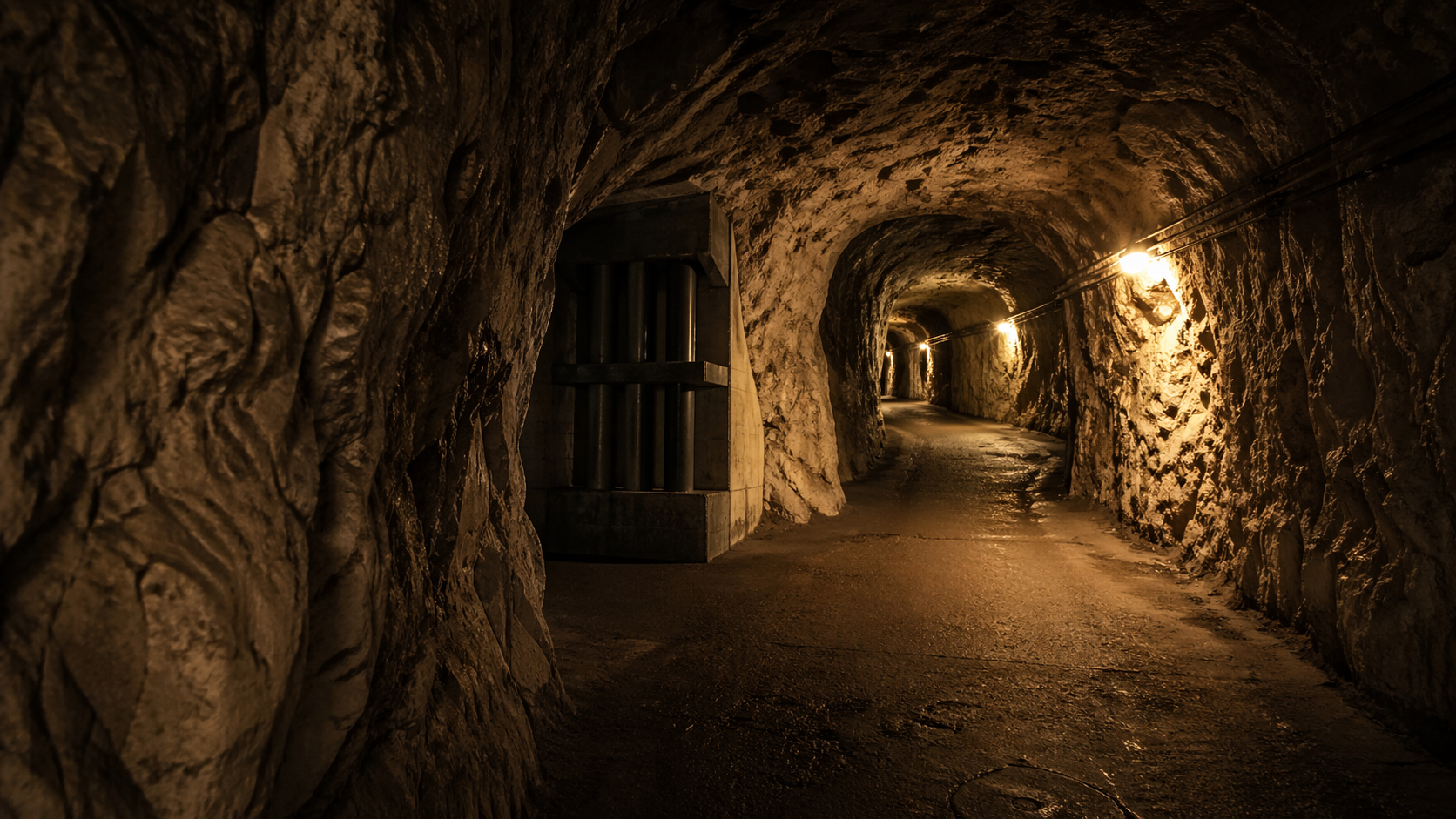
- Over 50 km of tunnels were carved inside the Rock during the war
- General Eisenhower used Gibraltar as his HQ for the November 1942 Allied landings in North Africa
- Spain's neutrality was critical to Gibraltar's survival — Germany's Operation Felix was planned but never executed
- You can still tour WWII tunnels inside the Rock today
Why Gibraltar Mattered in 1939
The Strait of Gibraltar is the only maritime connection between the Atlantic Ocean and the Mediterranean Sea. In wartime, controlling that strait meant controlling supply lines to North Africa, Malta, the Middle East, and beyond. The British understood this acutely — Gibraltar had been a Royal Navy base since 1704, and the strategic logic had not changed in 235 years.
When war broke out, Gibraltar's population was around 22,000 civilians plus a military garrison. The Rock was already fortified with artillery batteries, naval facilities, and an airfield. What it lacked was the deep tunnel network that modern aerial warfare demanded.
The Civilian Evacuation: 1940 to 1944
In 1940, with France falling and Italy entering the war, Gibraltar's civilian population was ordered to evacuate. Civilians in a military fortress were a liability. Roughly 13,000 initially went to French Morocco, then the fall of France forced a reroute. Evacuees ended up in Madeira, Jamaica, Northern Ireland, and the UK. Families were split. People left homes they had owned for generations.
The experience left a deep mark on Gibraltarian identity. The evacuees who went to Jamaica have a particular place in local memory. When they eventually returned, they came back to a changed Rock, scarred by military construction and tunnelling. Many Gibraltarian families still carry these stories of displacement across generations.
The war ended in 1945 but the restoration of civilian infrastructure took years. The last Gibraltarian evacuees did not return until 1951, six years after the war ended. The evacuation is a defining chapter in Gibraltarian history — taught in local schools and commemorated in the national museum.
Tunnelling the Rock: 50km of Wartime Engineering
Before WWII, some 6 km of tunnels existed inside the Rock — mostly from the Great Siege of 1779 to 1783. By 1945, that had expanded to over 50 km. Canadian and Royal Engineer tunnellers worked through solid limestone with compressed air drills, carving out barracks for up to 16,000 men, a fully equipped hospital, water reservoirs, power stations, fuel storage, and ammunition depots — all inside the Rock, protected from aerial bombardment.
Gibraltar became a hollowed-out fortress where the real strength lay underground. The main tunnelling programme ran from 1940 to roughly 1943, with hundreds of engineers working in shifts around the clock.
Operation Felix: Germany's Plan to Take Gibraltar
Hitler wanted Gibraltar. In 1940, with France defeated and Britain isolated, the Rock looked vulnerable. Operation Felix was the plan: German forces would cross Spain with Franco's permission, assault Gibraltar from the north, and close the western Mediterranean to British shipping.
It never happened. Franco's price was too high — he demanded post-war territorial concessions, food supplies, and political guarantees that Hitler was unwilling to provide. After the meeting at Hendaye in October 1940, the plan was shelved. Had Operation Felix succeeded, the entire Mediterranean war might have unfolded differently.
Operation Torch: Eisenhower's Headquarters Under the Rock
In November 1942, Gibraltar played its most significant strategic role. Operation Torch — the Allied invasion of French North Africa — was coordinated from a command centre inside the Rock's tunnels. General Eisenhower set up his headquarters in the limestone chambers, directing the invasion of over 100,000 troops landing simultaneously in Morocco and Algeria.
Eisenhower reportedly found the tunnels oppressive and gloomy. He described the headquarters as "miserable." But it worked. The North African campaign opened from Gibraltar's depths.
What You Can See Today
The WWII tunnels are partially accessible via the Upper Rock Nature Reserve. The Great Siege Tunnels (the older network) are the main visitor attraction, though wartime infrastructure is visible throughout the upper Rock. The Gibraltar National Museum in the town centre has exhibits on the evacuation, including photographs and personal accounts from evacuees — the human side of the military history.
Frequently Asked Questions
Were there any battles fought on Gibraltar itself during WWII?
No ground battles. Gibraltar was never directly attacked successfully. There were reconnaissance flights and Italian frogmen attacks on ships in the harbour, but no ground assault. Spain's neutrality kept the Rock from becoming a battlefield.
What happened to Gibraltarian civilians during the evacuation?
Approximately 16,700 civilians were evacuated to Madeira, Jamaica, Northern Ireland, and mainland Britain. Some spent the entire war away from Gibraltar. The last evacuees did not return until 1951, six years after the war ended.
Can tourists visit the WWII tunnels?
Parts of the tunnel network are accessible via organised tours of the Upper Rock. The Great Siege Tunnels are the main attraction and include military history interpretation. Entry is included in the Upper Rock Nature Reserve ticket. Some wartime areas remain restricted.
How did Gibraltar support Operation Torch specifically?
Eisenhower used Gibraltar as his Allied Forces Headquarters (AFHQ) for planning and coordinating the November 1942 North Africa landings. The Rock's tunnels housed the communications centre that directed the invasion fleet. After Torch succeeded, Eisenhower moved his HQ to Algiers.
Is there a memorial to the WWII evacuees?
Yes. The evacuation is commemorated in Gibraltar and covered extensively in the national museum. It remains a significant part of Gibraltarian collective memory and cultural identity, taught in schools and referenced in local literature and oral history.