Last updated: March 2026
Quick Summary
- Gibraltar's GDP per capita is among the highest in the world, estimated at over £60,000
- The iGaming industry accounts for roughly 25% of GDP and is the single largest economic driver
- Financial services, port operations, and tourism are the other key pillars
- Corporation tax is just 12.5% with no VAT, no capital gains tax, and no inheritance tax
- The economy has diversified significantly since the closure of the naval dockyard in the 1980s
What Drives Gibraltar's Economy?
Gibraltar has transformed from a military outpost into a modern, service-based economy. The territory punches well above its weight. With just 6.8 square kilometres and around 34,000 people, it generates economic output that rivals countries many times its size.
The shift began in the 1980s when the British naval dockyard closed and Gibraltar pivoted hard toward financial services and tourism. That pivot has only accelerated since, with iGaming, fintech, and distributed ledger technology (DLT) adding new layers to the economy.
How Important Is the iGaming Industry?
The online gaming industry is Gibraltar's economic powerhouse. At the time of writing, it contributes roughly 25% of GDP and employs thousands of people on the Rock. Gibraltar was one of the first jurisdictions in the world to regulate online gambling, issuing its first licences in the late 1990s.
Major operators based in Gibraltar include Bet365, Entain (formerly GVC Holdings), 888 Holdings, Lottoland, and BetVictor. These companies chose Gibraltar for its regulatory clarity, favourable tax regime, and access to skilled English-speaking workers.
| Sector | Estimated GDP Contribution | Key Players |
|---|---|---|
| iGaming | ~25% | Bet365, Entain, 888, Lottoland |
| Financial Services | ~20% | Banks, insurance, fund management |
| Port / Shipping | ~10% | Bunkering, ship repair, logistics |
| Tourism | ~10% | Cruise ships, day visitors, hotels |
| Construction | ~8% | Residential, commercial development |
| Government / Military | ~7% | Civil service, MOD |
Gibraltar was one of the first places to create a specific legal framework for DLT and blockchain businesses (the DLT Providers Regulations 2017). This forward-thinking approach continues to attract innovative tech companies.
What Role Do Financial Services Play?
Financial services have been central to Gibraltar's economy for decades. The sector includes banking, insurance, fund management, and wealth management. Gibraltar has its own financial services regulator, the Gibraltar Financial Services Commission (GFSC), which maintains high standards while being pragmatic about innovation.
The insurance sector is particularly notable. Several major insurers and insurance managers are headquartered in Gibraltar, benefiting from the ability to passport services across the EU (arrangements are evolving post-Brexit). At the time of writing, there are over 50 regulated financial services firms operating on the Rock.
How Does Gibraltar's Tax System Work?
Gibraltar's tax regime is one of its most powerful economic tools. It is simple, competitive, and designed to attract businesses and high-net-worth individuals.
| Tax Type | Rate / Status |
|---|---|
| Corporation Tax | 12.5% |
| Personal Income Tax | Progressive, max varies by system chosen |
| VAT / Sales Tax | None |
| Capital Gains Tax | None |
| Inheritance Tax | None |
| Wealth Tax | None |
| Import Duty | Low rates on most goods |
The absence of VAT is significant. It means consumer prices on many goods are lower than in Spain or the UK. It also simplifies business operations considerably. No VAT returns, no VAT registration thresholds to worry about.
What About Shipping and Port Operations?
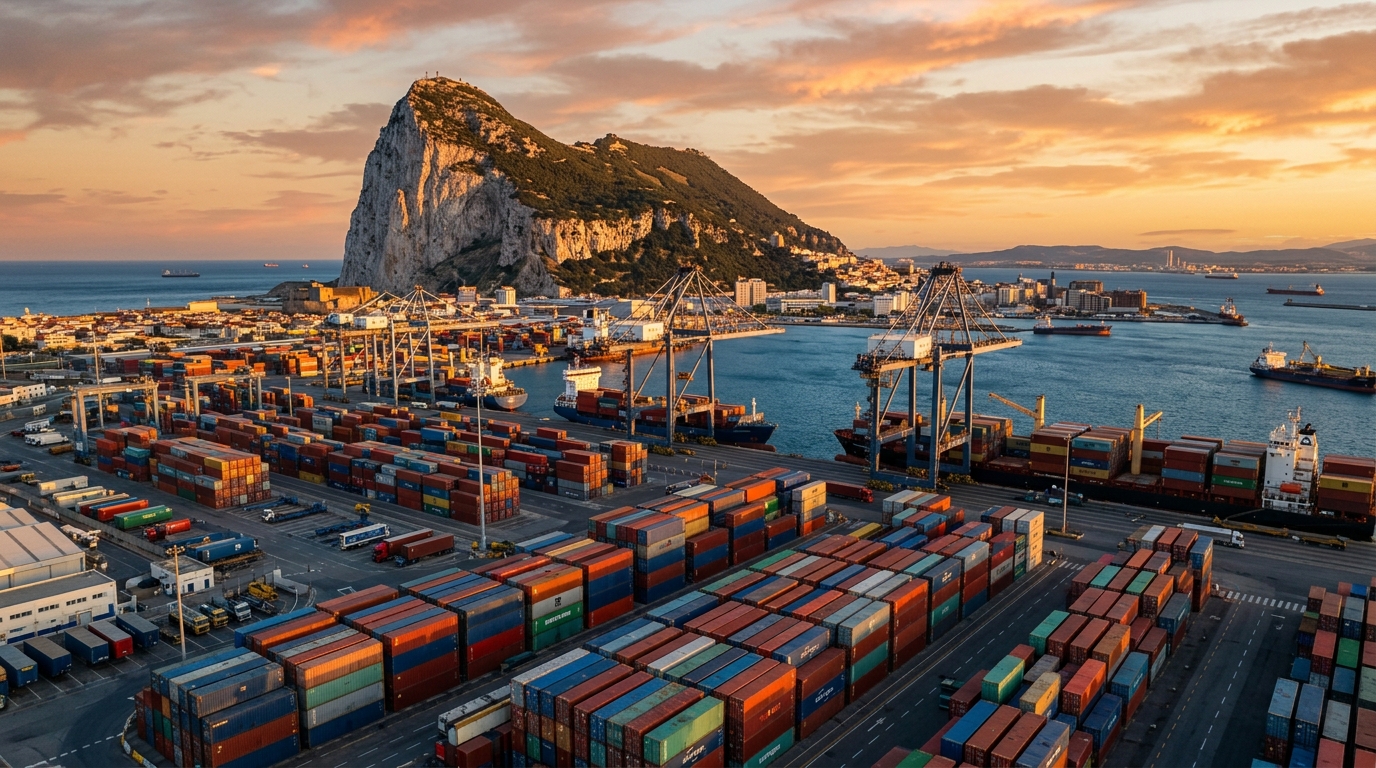
Gibraltar's port is one of the busiest in the Mediterranean, strategically positioned at the entrance to the strait. The territory is a major bunkering hub (ship refuelling), handling millions of tonnes of fuel annually. It consistently ranks among the top bunkering ports globally.
Port activities also include ship repair, yacht services, and crew changes. The port generates significant revenue for the territory and provides employment across logistics, engineering, and maritime services.
Sitting at the meeting point of the Atlantic and the Mediterranean, Gibraltar sees hundreds of ships pass through the Strait every day. This geographic advantage has been an economic asset for centuries, from the days of the Royal Navy to today's commercial shipping.
How Does Tourism Contribute to the Economy?
Tourism brings in around 10 million visitors annually when you include day trippers from Spain and cruise ship passengers. The Upper Rock Nature Reserve, the famous Barbary macaques, St Michael's Cave, and the Great Siege Tunnels are the main draws.
Cruise tourism has grown substantially. Gibraltar's port regularly hosts multiple cruise ships simultaneously, each bringing thousands of passengers who spend money on Main Street shopping, tours, and dining. The duty-free status makes Gibraltar an attractive stop for cruise itineraries.
What Is the Construction Sector Doing?
Construction is booming in Gibraltar, driven by demand for both residential and commercial space. With land being so scarce, new developments tend to be ambitious. Reclamation projects have created new buildable areas, and several major residential and mixed-use projects are underway or recently completed.
Notable recent and ongoing developments include projects around Kings Wharf, the Eastside development, and various luxury residential towers. The construction sector provides significant employment and drives demand for supporting services like architecture, engineering, and legal conveyancing.
What Are the Challenges Facing Gibraltar's Economy?
Despite its successes, Gibraltar faces some structural challenges. The territory's relationship with the EU post-Brexit remains a work in progress. The pending tax treaty with Spain and the broader UK-EU negotiations over Gibraltar's status will shape the economic landscape for years to come.
Other challenges include limited physical space for growth, a tight labour market that relies heavily on cross-border workers from Spain, and the need to continue diversifying beyond iGaming and financial services.
Frequently Asked Questions
What currency does Gibraltar use?
Gibraltar uses the Gibraltar pound (GIP), which is pegged 1:1 to the British pound sterling. British pounds are accepted everywhere in Gibraltar, though Gibraltar pounds are not always accepted in the UK.
Is Gibraltar part of the EU?
No. Gibraltar left the EU along with the UK following Brexit. However, negotiations are ongoing regarding Gibraltar's future relationship with the EU, including arrangements for the border with Spain.
Can anyone set up a business in Gibraltar?
Yes, but you need to meet certain requirements including having a registered office in Gibraltar and, in many cases, a local director. Regulated activities (financial services, gaming) require specific licences from the relevant authorities.
How many people work in Gibraltar?
The total workforce is estimated at around 30,000 to 33,000 at the time of writing. Roughly half are cross-border workers who commute daily from Spain, which highlights how interconnected the two economies are.
What is Gibraltar's GDP?
Gibraltar does not publish GDP figures as frequently as larger nations, but estimates place it at over £2 billion. GDP per capita is among the highest globally, reflecting the concentration of high-value industries in a small territory.
Written by Ethan Roworth