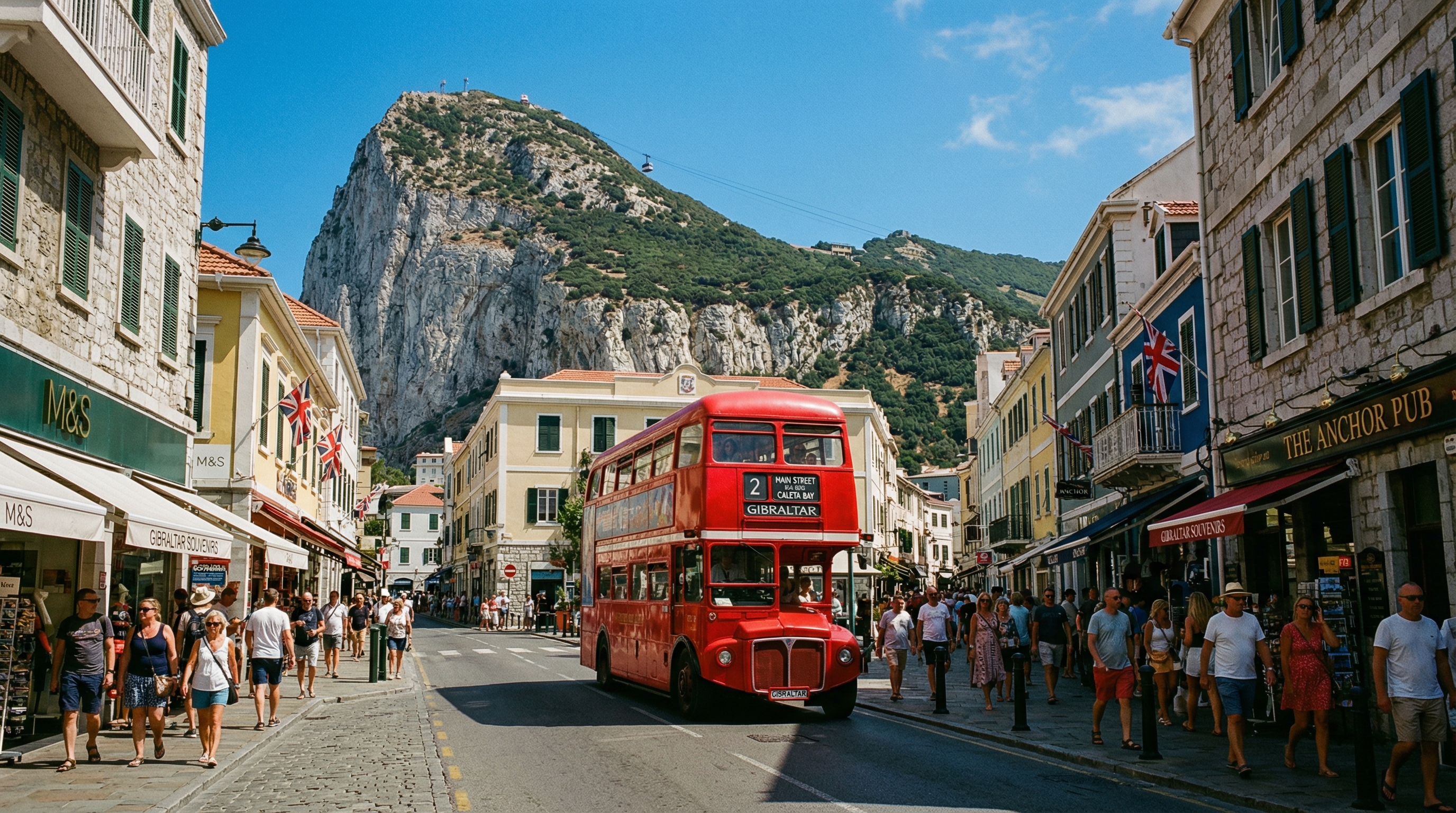
Gibraltar is only 6.7 square kilometres, making it one of the smallest territories you will ever visit. But do not let the size fool you. Between steep hills, narrow lanes, one-way systems and the occasional Barbary macaque blocking your path, getting around still takes some planning. This guide covers every transport option on the Rock so you can move around with confidence.
Walking is the best way to explore the town centre. Buses cover the main routes for £1.60 per ride. Taxis use fixed rates. The cable car takes you to the top of the Rock in 6 minutes. Parking is extremely limited, so leave the car in La Linea if you can.
1. Walking: The Best Way to See Gibraltar
Most of Gibraltar's town area is perfectly walkable. Main Street runs the full length of the city centre and is entirely pedestrianised, stretching roughly 1 kilometre from Casemates Square in the north to Referendum Gates in the south. You can walk from one end to the other in about 15 minutes.
The flat areas around town, the marina, and Ocean Village are all easy on foot. Things change when you start heading uphill toward the Upper Rock Nature Reserve, where paths get steep and uneven. Wear proper shoes if you plan to hike the Mediterranean Steps or the Royal Anglian Way. These trails can take 2 to 3 hours depending on your fitness level.
Top tip: Casemates Square is the natural starting point for exploring on foot. Most shops, restaurants and attractions branch out from there.
2. Bus Routes
The Gibraltar Bus Company operates 10 routes across the territory. Buses are red, clean and relatively modern. A single journey costs £1.60 (exact change helps, though contactless payment is available on most buses). A day pass costs £3.00 and gives you unlimited travel.
| Route | Key Stops | Useful For |
|---|---|---|
| Route 2 | Market Place to Europa Point | Ibrahim-al-Ibrahim Mosque, Europa Point Lighthouse |
| Route 3 | Market Place to Europa Point (via Rosia Road) | Rosia Bay, Parson's Lodge Battery |
| Route 4 | Market Place to Upper Town / Willis's Road | Moorish Castle area, Upper Rock access |
| Route 5 | Market Place to Both Worlds (frontier area) | Border crossing, airport |
| Route 7 | Reclamation Road to Europa Point (via Catalan Bay) | Catalan Bay beach, Eastern Beach |
Buses run from approximately 6:45am to 9:15pm on weekdays, with reduced service on weekends. Most routes run every 15 to 20 minutes during peak hours. You can check real-time arrivals at stops or download the Gibraltar Bus Company app.
3. Taxis
Gibraltar taxis are metered, but many journeys use fixed rates set by the government. You will find taxi ranks at the border, Casemates Square, the cruise terminal and the cable car station.
| Journey | Approximate Fare |
|---|---|
| Border to Casemates Square | £5 to £7 |
| Casemates to Europa Point | £8 to £10 |
| Rock Tour (1.5 hours, covers main sights) | £25 to £35 per person |
| Cruise Terminal to Town Centre | £4 to £6 |
Tipping is not expected but rounding up is appreciated. For Rock tours by taxi, agree on the price and itinerary before setting off. Many drivers double as unofficial tour guides and know the history well.
4. The Cable Car
The Gibraltar Cable Car runs from the Botanic Gardens area (Red Sands Road) to the top of the Rock at 412 metres above sea level. The ride takes about 6 minutes each way and offers panoramic views of Gibraltar, the Strait, Morocco and the Spanish coastline.
Tickets:
- Adult return: £16.00
- Child return (4 to 11): £9.00
- One way adult: £12.50
- Combination tickets with Nature Reserve entry are available and save a few pounds
The cable car runs from 9:30am to 5:15pm (last ascent at 5:15pm, last descent at 5:45pm). It can close without warning in high winds, so check the weather beforehand. There is also a mid-station at the Apes' Den where you can see the Barbary macaques up close.
5. Parking
Parking in Gibraltar is extremely limited. The territory has far more cars per capita than most places in Europe, and street parking fills up fast. If you are visiting for the day, seriously consider leaving your car in La Linea (on the Spanish side of the border) and walking across.
Where to park if you must drive in:
- Grand Parade Car Park (multi-storey, central) is the largest option with around 900 spaces
- Midtown Car Park is newer and centrally located
- ICC Parking near the border area
- Street parking is pay-and-display in most areas, costing around £0.50 to £1.00 per hour
In La Linea: There are large open car parks within a 5 to 10 minute walk of the border. Some are free, others charge around €5 to €10 per day. This is by far the easiest option for day visitors.
6. Driving in Gibraltar
Driving is possible but not always practical. Gibraltar drives on the right-hand side of the road (despite being a British territory). Speed limits are 50 km/h on most roads and 30 km/h in residential areas.
Key things to know:
- The road layout is full of one-way systems, especially around the town centre and harbour area
- You will drive across the airport runway when entering from Spain. Traffic lights stop cars when planes land or take off
- Roads can be narrow and steep, particularly heading south or uphill
- A valid driving licence from most countries is accepted. An International Driving Permit is recommended but rarely required for short visits
You will need your passport (or national ID card for EU citizens), vehicle registration documents, and valid insurance. Queues at the border can range from 5 minutes to over an hour, especially on weekends and public holidays. Check the webcams at the border for live queue estimates.
7. E-Scooters and Bikes
E-scooters and cycling in Gibraltar are growing slowly. The flat reclaimed areas along the waterfront and around Ocean Village are suitable for cycling, but most of the territory is too hilly for casual riding.
There is no major public bike-share or e-scooter rental scheme as of early 2026. A few local shops rent bikes, and some hotels offer them to guests. If you bring your own e-scooter, be aware that regulations are still being formalised and riders should stick to roads rather than pavements.
For longer rides, the cycle path along the Eastern Beach promenade is flat and scenic, running from the airport area toward Catalan Bay.
Frequently Asked Questions
Can I walk everywhere in Gibraltar?
You can walk across most of the town centre easily. Reaching Europa Point (the southern tip) or the Upper Rock on foot takes more effort, around 45 minutes to an hour from the town centre. Most visitors walk the flat areas and use the cable car or bus for the rest.
Do Gibraltar buses accept cards?
Most buses now accept contactless payments. Carrying small change is still a good idea as backup, especially on older buses.
Is it worth driving into Gibraltar?
For day trips, no. Parking is scarce and border queues eat into your time. Walk across from La Linea instead. If you are staying several days and want to explore Europa Point or the eastern beaches at your own pace, having a car can be convenient.
How long does the cable car take?
The cable car ride is approximately 6 minutes each way. Plan for 2 to 3 hours at the top if you want to explore the Nature Reserve, see the Apes' Den, and visit St. Michael's Cave.
Are there Uber or ride-hailing apps in Gibraltar?
No. Uber and similar apps do not operate in Gibraltar. Use the local taxi ranks or call a taxi company directly.
Last updated: March 2026
Written by Ethan Roworth