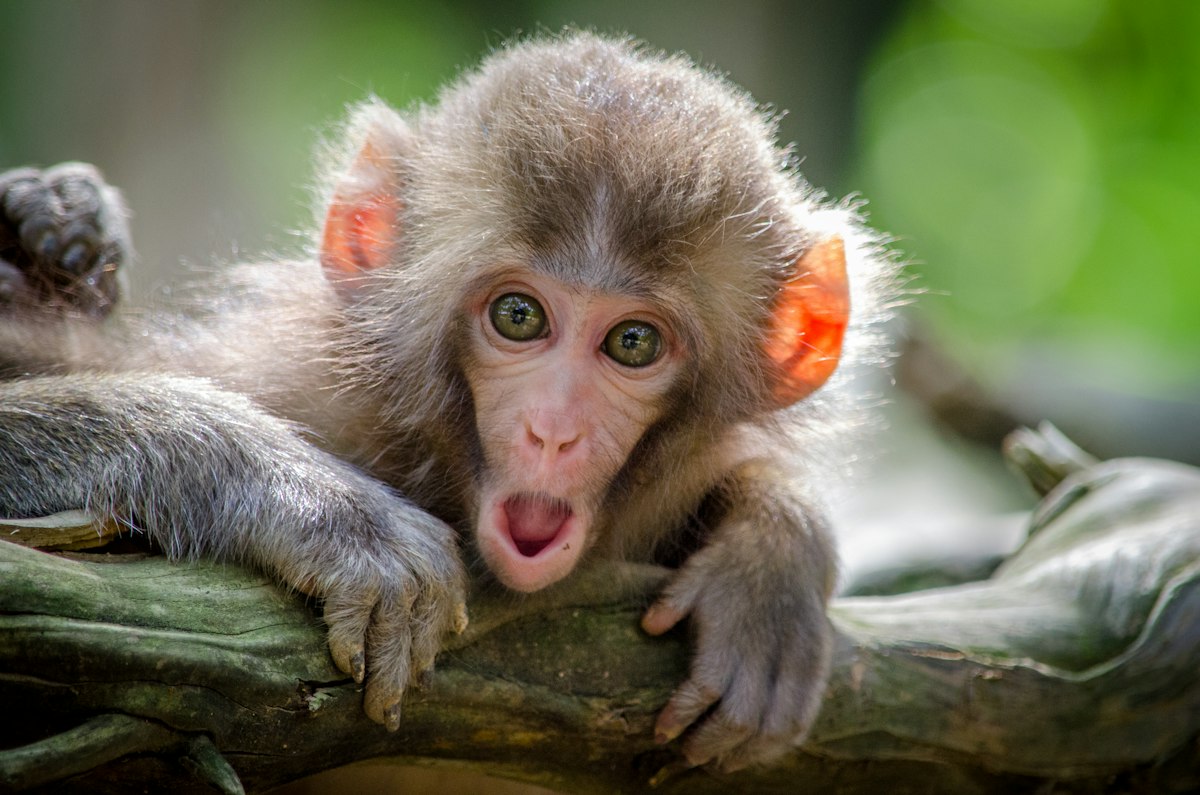
Gibraltar's Barbary macaques (Macaca sylvanus) are one of the territory's most famous attractions and hold a unique distinction: they are the only wild primate population in Europe. Approximately 230 macaques live in several troops across the Upper Rock, and they have become an enduring symbol of Gibraltar itself. Their story intertwines with history, legend, military tradition, and modern conservation.
Origins and History
The exact origin of Gibraltar's macaques is debated among scientists. Barbary macaques are native to the Atlas Mountains and Rif region of Morocco and Algeria in North Africa. The most widely accepted theory is that the macaques were introduced to Gibraltar by humans, possibly during the Moorish occupation (711-1462 AD) or earlier. Some scientists have speculated about a natural crossing during periods of lower sea levels, but genetic studies strongly suggest human introduction.
DNA analysis has confirmed that Gibraltar's macaque population has been supplemented multiple times throughout history, with introductions from both Moroccan and Algerian populations. The most well-documented reintroduction occurred during World War II, when Prime Minister Winston Churchill personally ordered that the macaque population be reinforced after numbers dwindled to just seven individuals.
The Churchill Legend
The most famous story about the macaques concerns a popular legend: as long as Barbary macaques exist on Gibraltar, the territory will remain under British rule. During World War II, when the macaque population declined dangerously, Churchill - who took the legend seriously - ordered that macaques be brought from Morocco to replenish the colony. He directed that the apes be well cared for at military expense. The War Office duly arranged for new macaques to be imported, and the population recovered.
While the story may have a basis in wartime pragmatism rather than genuine superstition, it has become one of Gibraltar's most beloved legends and contributes to the symbolic importance of the macaques.
Where to See Them
The macaques live in several groups across the Upper Rock Nature Reserve. The most popular viewing location is the Apes' Den (also known as the Queen's Gate), located near the middle station of the Gibraltar Cable Car. Here, a troop of macaques is reliably found, and visitors can observe them at close range.
Other troops inhabit areas around the Great Siege Tunnels, the Mediterranean Steps, and the upper slopes of the Rock. Macaques are also occasionally seen lower in the town area, particularly at the cable car base station and sometimes on residential streets - though the Gibraltar Macaque Management team works to keep them within the reserve.
Behaviour and Biology
Barbary macaques are medium-sized primates, with adults weighing 10-15 kg. They are tailless (or have only a vestigial tail), which distinguishes them from most other monkeys and has led to them being locally called "apes" - though they are technically monkeys, not apes. Key behavioural facts:
- Social structure: Macaques live in multi-male, multi-female groups of 10-80 individuals, with a clear dominance hierarchy.
- Diet: In the wild, they eat leaves, roots, seeds, insects, and bark. In Gibraltar, their diet is supplemented by the Gibraltar Ornithological and Natural History Society (GONHS) and the Government's macaque management team with fresh fruits and vegetables.
- Reproduction: Females give birth to a single infant after a gestation period of approximately 5.5 months. Births typically occur between May and September.
- Lifespan: Barbary macaques can live 20-25 years in the wild.
- Male infant care: Unusually among primates, male Barbary macaques are highly involved in infant care, frequently carrying, grooming, and presenting infants to other males as part of social bonding behaviour.
Conservation
Barbary macaques are classified as Endangered on the IUCN Red List. The global population has declined dramatically due to habitat loss, illegal capture for the pet trade, and human persecution in North Africa. The Moroccan and Algerian populations are estimated at around 6,000-10,000 individuals and are continuing to decline.
Gibraltar's population, while small, is genetically managed and carefully monitored. The Gibraltar Macaque Management Plan oversees population control (through contraception), veterinary care, and efforts to minimise human-macaque conflict. The plan is managed jointly by the Department of the Environment and the GONHS.
Rules for Visitors
Visitors must follow strict rules when interacting with the macaques:
- Do not feed the macaques. It is illegal under Gibraltar law, and offenders face fines of up to £4,000.
- Secure your belongings. Macaques will grab bags, cameras, food, sunglasses, and other items. Keep bags zipped and close to your body.
- Do not touch or chase the macaques. They are wild animals with sharp teeth and can bite if they feel threatened.
- Do not make prolonged eye contact. In macaque social behaviour, direct staring is perceived as a threat.
- Keep a respectful distance. While the macaques are habituated to humans, they deserve space.
An Endangered Species on European Soil
Gibraltar's Barbary macaques represent a unique conservation opportunity - an endangered primate species living under the protection of a well-resourced territory with strong environmental legislation. The macaques serve as ambassadors for their species, raising awareness of the plight of wild Barbary macaques in North Africa and the importance of primate conservation worldwide.
Written by Ethan Roworth